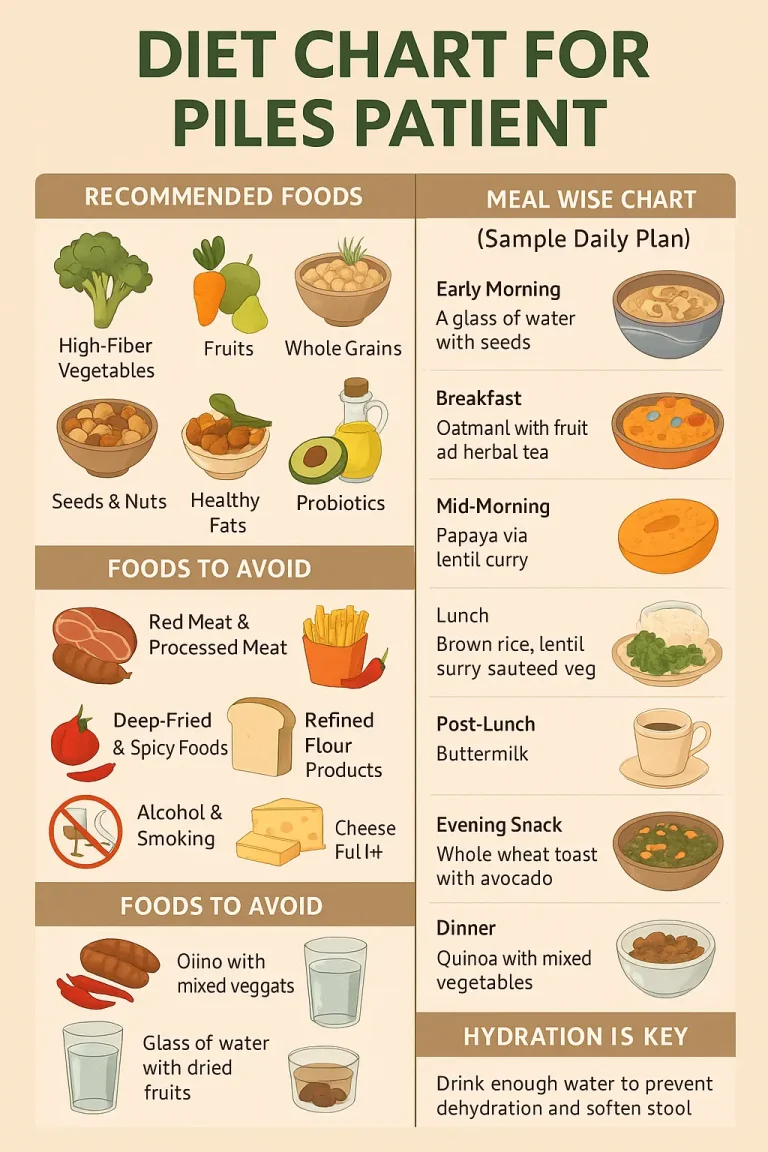
Diet for Piles Patients
Piles, medically known as Hemorrhoids, is a common condition that occurs when the veins in the rectum or anus become swollen and inflamed. This condition can cause symptoms such as pain, itching, swelling, and bleeding during bowel movements. One of the most effective ways to manage and prevent piles is through a healthy and balanced diet.
Diet plays a crucial role in improving digestion and preventing constipation, which is one of the main causes of piles. A proper diet can help soften stool, reduce straining during bowel movements, and relieve discomfort associated with hemorrhoids. For piles patients, eating the right foods and avoiding certain unhealthy habits can make a significant difference in recovery and overall health.
This article explains the best dietary practices for people suffering from piles.
Importance of Diet for Piles Patients
A healthy digestive system is essential for preventing piles from worsening. When stool becomes hard and difficult to pass, it puts pressure on the veins in the rectum. This pressure can increase swelling and pain.
A proper diet helps maintain regular bowel movements and keeps stool soft. By eating fiber-rich foods and drinking enough water, piles patients can reduce symptoms and improve their condition.
Dietary changes are often the first step recommended by doctors for managing piles.
High-Fiber Foods
Fiber is the most important nutrient for piles patients. It helps add bulk to stool and makes bowel movements easier. A diet rich in fiber prevents constipation and reduces pressure on the rectal veins.
There are two types of fiber: soluble fiber and insoluble fiber. Both are important for digestive health.
Fruits
Fruits are excellent sources of fiber and vitamins. They also contain natural water content, which helps soften stool.
Some of the best fruits for piles patients include:
Apples
Bananas
Oranges
Pears
Papaya
Papaya is especially helpful because it improves digestion and prevents constipation
Vegetables
Vegetables provide essential nutrients and fiber that support digestive health. Eating a variety of vegetables daily can help reduce the risk of piles symptoms.
Recommended vegetables include:
Spinac
Broccoli
Carrots
Cabbage
Pumpkin
Leafy green vegetables are particularly beneficial because they contain high amounts of fiber and minerals.
Whole Grains
Whole grains are another excellent source of dietary fiber. Unlike refined grains, whole grains retain their natural fiber content and support healthy digestion.
Good options include:
Brown rice
Oats
Whole wheat bread
Barley
Quino
These foods help maintain regular bowel movements and prevent constipation.
Legumes and Beans
Legumes are rich in both fiber and protein. They help improve digestion and promote healthy bowel function.
Examples include:
Lentils
Chickpeas
Kidney beans
Peas
Including legumes in meals can significantly increase fiber intake and benefit piles patients.
Importance of Hydration
Drinking enough water is essential for piles patients. Water helps soften stool and allows fiber to work effectively in the digestive system.
Doctors generally recommend drinking at least 6 to 8 glasses of water daily. Adequate hydration prevents constipation and reduces strain during bowel movements.
In addition to water, natural drinks such as fresh fruit juice, coconut water, and herbal tea can also support hydration.
Llllll
Healthy Snacks for Piles Patients
Piles patients should choose healthy snacks that support digestion rather than processed foods.
Some healthy snack options include:
Fresh fruits
Yogurt
Nuts such as almonds and walnuts
Whole grain crackers
These snacks provide nutrients and help maintain stable digestion throughout the day.
Foods to Avoid
While certain foods help improve piles symptoms, others can worsen the condition. Avoiding these foods is important for effective management.
Low-Fiber Foods
Low-fiber foods can cause constipation and increase pressure on the rectal veins.
Examples include:
White bread
Processed foods
Fast food
Replacing these foods with whole grain alternatives is recommended.
Spicy Foods
Very spicy foods may irritate the digestive system and worsen discomfort for piles patients. Although moderate spice may be acceptable for some individuals, excessive spicy food can increase irritation in the anal
Fried and Fatty Foods
Fried and fatty foods slow down digestion and may contribute to constipation. These foods should be limited to maintain healthy bowel function.
Excessive Caffeine and Alcohol
Too much caffeine or alcohol may lead to dehydration, which can make stool harder and more difficult to pass.
Moderation is important to maintain proper hydration and digestive health.
Sample Daily Diet Plan for Piles Patients
A balanced daily diet can help manage piles effectively.
Breakfast
Oatmeal with fruits such as banana or apple
A glass of warm water or herbal tea
Lunch
Brown rice or whole wheat bread
Vegetables such as spinach or carrots
Lentil soup or beans
Snacks
Fresh fruits or yogurt
Nuts such as almonds
Dinner
Vegetable soup
Whole grain bread or rice
Light salad
This type of diet supports digestion and helps prevent constipation.
Additional Dietary Tips
Piles patients can follow some additional dietary habits to improve their condition.
Helpful tips include:
Eat meals at regular times
Chew food slowly and thoroughly
Avoid overeating
Include fresh fruits and vegetables daily
These habits help maintain healthy digestion and reduce pressure on the rectal veins.
Conclusion
Diet plays a vital role in managing and preventing piles. A diet rich in fiber, combined with adequate hydration, can significantly reduce symptoms such as constipation, pain, and discomfort. Fruits, vegetables, whole grains, and legumes are highly recommended for piles patients because they support healthy digestion and promote regular bowel movements.
At the same time, it is important to avoid low-fiber foods, excessive spicy meals, fried foods, and dehydration. By following a balanced and nutritious diet, piles patients can improve their digestive health and prevent the condition from worsening.
Maintaining healthy eating habits along with regular physical activity and proper hydration can help individuals manage piles effectively and lead a comfortable and healthy life. If symptoms persist despite dietary changes, consulting a healthcare professional is recommended for further treatment.