
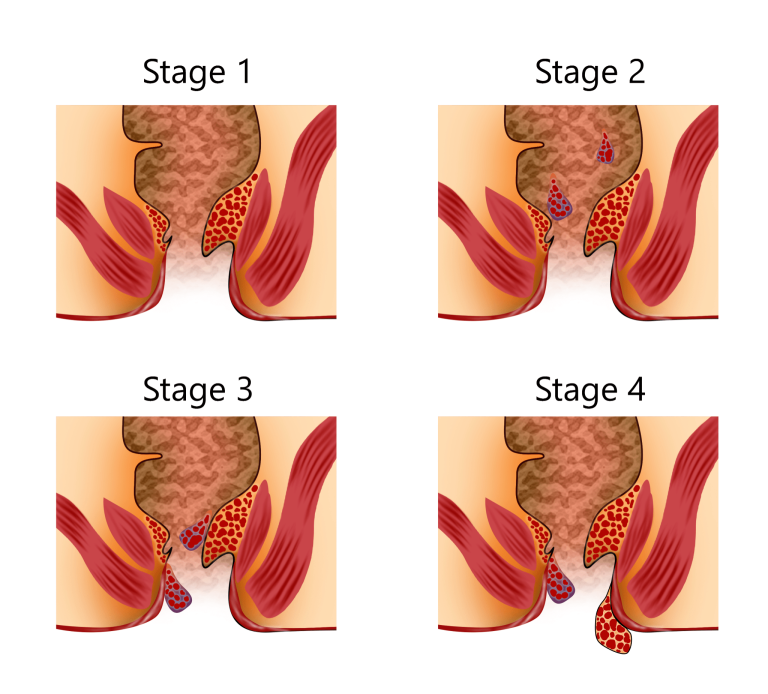
Stages of Piles
Piles, medically known as Hemorrhoids, is a common condition that affects many people worldwide. It occurs when the veins in the lower rectum or around the anus become swollen and inflamed. This swelling can cause discomfort, itching, pain, and bleeding during bowel movements.
Piles can develop gradually and progress through different stages depending on their severity. Understanding the stages of piles is important because early detection and treatment can prevent the condition from worsening. Doctors usually classify internal hemorrhoids into four stages or grades based on how far the swollen veins protrude from the rectum.
This article explains the four stages of piles, their symptoms, and available treatment options.
Understanding the Progression of Piles
Piles do not appear suddenly in severe form. They usually develop slowly due to factors such as chronic constipation, straining during bowel movements, prolonged sitting, pregnancy, or a low-fiber diet.
As pressure on the rectal veins continues, the veins begin to swell and stretch. Over time, this swelling increases and leads to the formation of hemorrhoids. If left untreated, piles may progress from mild to severe stages.
Stage 1: Early or Mild Piles
Stage 1 is the earliest stage of piles. In this stage, the hemorrhoids are small and located inside the rectum. They are not visible from outside the anus and usually do not cause severe symptoms.
Symptoms of Stage 1 Piles
People with stage 1 piles may experience:
Mild discomfort during bowel movements
Occasional bleeding from the rectum
Slight irritation inside the rectum
Because the hemorrhoids are internal, they usually do not cause pain. The most common symptom is small amounts of bright red blood seen on toilet paper or in the toilet bowl.
Treatment for Stage 1 Piles
At this stage, piles can usually be treated with simple lifestyle changes, including:
Eating a high-fiber diet
Drinking plenty of water
Exercising regularly
Avoiding straining during bowel movements
Doctors may also recommend fiber supplements or mild medications to improve bowel movement.
Early treatment at this stage can often prevent the condition from progressing.
Stage 2: Moderate Piles
In stage 2, the hemorrhoids become larger and may protrude outside the anus during bowel movements. However, they usually return to their original position inside the rectum afterward.
Symptoms of Stage 2 Piles
Symptoms in this stage may include:
Bleeding during bowel movements
Mild pain or discomfort
Itching around the anus
Temporary prolapse of hemorrhoids during bowel movements
Although the hemorrhoids may come out during bowel movements, they usually go back inside without any manual assistance.
Treatment for Stage 2 Piles
Doctors may recommend both lifestyle changes and medical treatments for stage 2 piles.
Common treatments include:
Topical creams or ointments
Stool softeners
Warm sitz baths
If symptoms persist, doctors may recommend minimally invasive procedures such as:
Rubber band ligation
Sclerotherapy
Infrared coagulation
These treatments shrink the hemorrhoids and prevent further progression.
Stage 3: Advanced Piles
Stage 3 piles are more severe and often require medical treatment. In this stage, hemorrhoids prolapse outside the anus during bowel movements and do not return inside automatically.
However, the hemorrhoids can usually be pushed back into the rectum manually.
Symptoms of Stage 3 Piles
Symptoms at this stage may include:
Noticeable lumps around the anus
Frequent bleeding
Pain or discomfort during bowel movements
Itching and irritation
Mucus discharge
Because the hemorrhoids are larger and more exposed, they may cause increased discomfort and hygiene difficulties.
Treatment for Stage 3 Piles
Treatment for stage 3 piles often involves medical procedures.
Doctors may recommend:
Rubber band ligation
Laser treatment
Stapled hemorrhoidopexy
These procedures help shrink or reposition the hemorrhoids and relieve symptoms.
In some cases, surgical removal may be recommended if other treatments are not effective.
Stage 4: Severe Piles
Stage 4 is the most severe stage of piles. In this stage, the hemorrhoids remain permanently prolapsed outside the anus and cannot be pushed back inside.
This condition can cause significant pain and discomfort and may lead to complications if not treated properly.
Symptoms of Stage 4 Piles
People with stage 4 piles may experience:
Severe pain in the anal area
Large swollen lumps around the anus
Persistent bleeding
Difficulty sitting or walking comfortably
Increased risk of infection or blood clots
In some cases, a blood clot may form inside the hemorrhoid, causing a condition known as thrombosed hemorrhoids.
Treatment for Stage 4 Piles
Surgery is usually required for stage 4 piles.
Common surgical treatments include:
Hemorrhoidectomy (surgical removal of hemorrhoids)
Stapled hemorrhoidopexy
Laser hemorrhoid surgery
Although surgery may require longer recovery, it provides long-term relief from severe piles.
Importance of Early Diagnosis
Many people ignore piles symptoms due to embarrassment or lack of awareness. However, early diagnosis is important to prevent the condition from progressing to more severe stages.
Consulting a doctor at the early stage allows patients to receive proper treatment and avoid more invasive procedures.
Regular medical consultation is recommended if symptoms such as bleeding, pain, or swelling occur.
Preventing the Progression of Piles
Certain lifestyle changes can help prevent piles from worsening.
Helpful preventive measures include:
Eating a fiber-rich diet
Drinking adequate amounts of water
Avoiding prolonged sitting
Exercising regularly
Responding promptly to the urge to pass stool
These habits help maintain healthy digestion and reduce pressure on rectal veins.
Conclusion
Piles develop gradually and progress through four main stages, ranging from mild internal hemorrhoids to severe prolapsed hemorrhoids. Stage 1 and stage 2 piles are usually mild and can often be managed with lifestyle changes and simple treatments. Stage 3 and stage 4 piles are more severe and may require medical procedures or surgery.
Understanding the stages of piles helps individuals recognize symptoms early and seek appropriate treatment. Early medical care can prevent complications and ensure faster recovery.
By maintaining healthy lifestyle habits and consulting a doctor when symptoms appear, individuals can effectively manage piles and maintain better digestive health.