
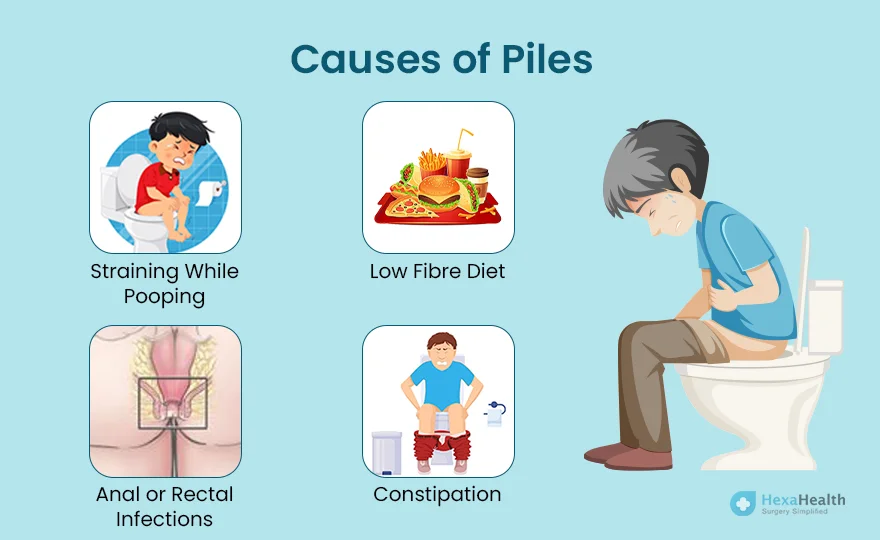
Causes of Piles
Piles, medically known as Hemorrhoids, is a common medical condition that affects millions of people worldwide. It occurs when the veins in the lower rectum or around the anus become swollen and inflamed. These swollen veins can cause discomfort, itching, pain, and sometimes bleeding during bowel movements.
Piles can develop for many reasons, but the main cause is increased pressure on the veins in the rectal area. Several lifestyle habits, medical conditions, and physical factors can contribute to this pressure and lead to the development of piles.
Understanding the causes of piles is important because it helps people take preventive measures and reduce the risk of developing the condition.
Chronic Constipation
One of the most common causes of piles is chronic constipation. When a person suffers from constipation, the stool becomes hard and difficult to pass. This often leads to excessive straining during bowel movements.
Straining increases pressure on the veins in the rectum and anus. Over time, this pressure can cause the veins to swell and form hemorrhoids.
People who do not consume enough fiber or drink enough water are more likely to experience constipation. Therefore, maintaining a healthy diet is important for preventing piles.
Straining During Bowel Movements
Even without chronic constipation, frequent straining while passing stool can cause piles. Straining increases pressure on the rectal veins and weakens the blood vessel walls.
Many people develop the habit of sitting on the toilet for a long time, which can also contribute to straining. When a person spends too much time on the toilet, the veins in the anal region are placed under unnecessary pressure.
Over time, this repeated strain can lead to swollen veins and the development of piles.
Low-Fiber Diet
A diet low in fiber is another major cause of piles. Fiber plays an important role in digestion because it helps soften stool and makes bowel movements easier.
Without enough fiber, stool becomes hard and dry, which increases the risk of constipation and straining.
Common sources of fiber include:
Fruits such as apples, bananas, and oranges
Vegetables like spinach, carrots, and broccoli
Whole grains such as oats and brown rice
Legumes like lentils and beans
A diet lacking these foods may increase the likelihood of developing piles.
Prolonged Sitting
Sitting for long periods of time can also contribute to the development of piles. This is especially common among people who have desk jobs or spend many hours sitting each day.
Prolonged sitting increases pressure on the lower rectum and reduces blood circulation in the anal region. Over time, this pressure can cause the veins to swell.
Sitting for long periods on the toilet can also increase the risk of piles.
Taking short breaks to stand, stretch, and move around can help reduce this pressure and prevent the condition.
Pregnancy
Pregnancy is another common cause of piles, especially during the later stages. As the uterus grows, it places pressure on the veins in the pelvic area.
This increased pressure can slow down blood circulation and cause the veins in the rectum to swell.
Hormonal changes during pregnancy can also relax the walls of blood vessels, making them more prone to swelling.
Many pregnant women experience piles, but the condition often improves after childbirth.
Obesity
Being overweight or obese increases the risk of developing piles. Excess body weight places additional pressure on the veins in the abdomen and pelvic region.
This pressure can affect blood flow and cause the veins in the rectum to become swollen.
Maintaining a healthy body weight through proper diet and regular exercise can reduce the risk of piles.
Heavy Lifting
Frequent heavy lifting can also contribute to the development of piles. Activities that involve lifting heavy objects increase pressure in the abdominal area.
This pressure can be transmitted to the veins in the rectum, causing them to swell over time.
People whose jobs require heavy lifting should use proper lifting techniques and take breaks when necessary to reduce strain on the body.
Aging
Age is another factor that increases the risk of piles. As people get older, the tissues supporting the veins in the rectum and anus become weaker.
This weakening makes the veins more likely to stretch and swell under pressure.
Although piles can occur at any age, they are more common in adults over the age of 45.
Chronic Diarrhea
While constipation is a major cause of piles, chronic diarrhea can also contribute to the condition. Frequent bowel movements can irritate the rectal area and cause inflammation.
Repeated irritation may lead to swelling of the veins and the development of hemorrhoids.
Maintaining a balanced diet and addressing digestive problems early can help reduce this risk.
Lack of Physical Activity
A sedentary lifestyle can increase the likelihood of developing piles. Physical activity helps maintain healthy digestion and promotes regular bowel movements.
When people do not exercise regularly, their digestive system may slow down, leading to constipation and increased pressure on rectal veins.
Simple activities such as walking, cycling, or yoga can improve digestion and help prevent piles.
Family History and Genetic Factors
Some people may be more prone to piles because of genetic factors. If family members have a history of hemorrhoids, the risk of developing the condition may be higher.
Genetic factors may influence the strength of blood vessels and connective tissues in the body. Weaker tissues may make the veins more susceptible to swelling.
Although genetics cannot be changed, adopting healthy habits can reduce the risk.
Preventing the Causes of Piles
Understanding the causes of piles can help people take steps to prevent the condition.
Some effective preventive measures include:
Eating a high-fiber diet
Drinking plenty of water
Exercising regularly
Avoiding prolonged sitting
Maintaining healthy body weight
Avoiding excessive straining during bowel movements
These lifestyle habits improve digestion and reduce pressure on rectal veins.
Conclusion
Piles is a common condition that occurs when the veins in the rectum or anus become swollen due to increased pressure. Several factors contribute to this pressure, including chronic constipation, straining during bowel movements, low-fiber diet, prolonged sitting, pregnancy, obesity, heavy lifting, aging, chronic diarrhea, and lack of physical activity.
Understanding these causes is important for preventing the condition and maintaining good digestive health. By adopting healthy lifestyle habits such as eating fiber-rich foods, staying hydrated, exercising regularly, and avoiding prolonged sitting, individuals can significantly reduce their risk of developing piles.
If symptoms such as pain, bleeding, or swelling occur, it is important to consult a medical professional for proper diagnosis and treatment. Early care can prevent complications and help maintain a healthy and comfortable life.